
Good vs Bad Carbs for Fitness: Healthy Sources, Athlete Fuel, and Better Bread and Pasta

Carbs get blamed for everything from stubborn body fat to afternoon crashes, but the real story is more useful than “carbs are bad.” Carbohydrates are the body’s easiest fuel source. Muscles store them as glycogen, the brain uses glucose, and hard training feels a lot harder when intake is too low.
The trick is learning which carbohydrates help health and fitness, which ones work against most goals, and how much an active body actually needs. A banana before a run, roasted sweet potatoes with dinner, and lentils after a workout are very different from a sleeve of cookies or a large soda. They all contain carbohydrates, but they do not behave the same way in the body.
This article is for general education and should not replace medical or nutrition advice, especially for anyone managing diabetes, digestive disease, eating disorders, or high-level athletic performance.
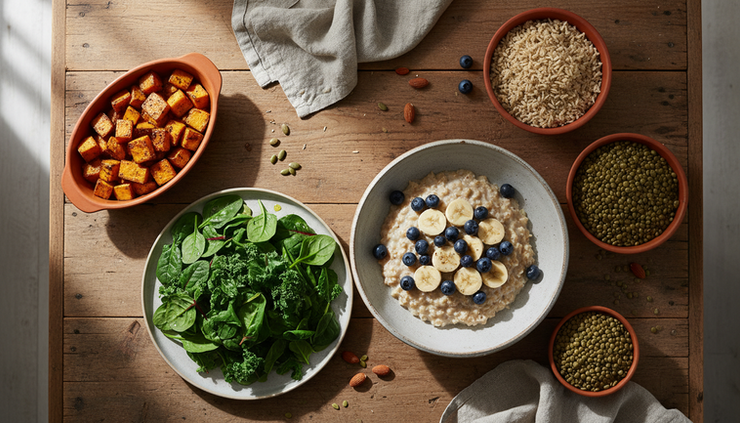
Good carbs and bad carbs are separated by quality
Carbohydrates are one of the three main macronutrients, along with protein and fat. They break down into sugars that the body can use for energy. That does not mean all carbs are equal.
Good carbohydrates usually come with fiber, water, vitamins, minerals, and plant compounds. They digest more slowly, tend to be more filling, and support steadier energy. Most are minimally processed or processed in ways that keep the food’s natural structure mostly intact.
Examples include:
Fruit, such as apples, berries, oranges, bananas, and pears
Vegetables, especially potatoes, squash, carrots, beets, peas, and corn
Whole grains, such as oats, brown rice, quinoa, barley, and farro
Beans, lentils, chickpeas, and split peas
Sprouted grain breads, including Ezekiel bread
Plain yogurt or kefir, if dairy fits the diet
“ Bad carbohydrates” is a common phrase, but “low-quality carbs” is more accurate. These are usually refined, sugary, or heavily processed. Many have had much of their fiber and nutrients removed, then had sugar, fats, flavorings, or salt added to make them easy to overeat.
Common examples include:
Soda and sweet tea
Candy and packaged pastries
Sugary breakfast cereals
White sandwich bread made mostly from refined flour
Chips, crackers, and snack cakes
Sweetened coffee drinks
Large portions of desserts eaten often
The difference is not just calories. A bowl of oatmeal with berries and walnuts may have a similar calorie count to a frosted pastry, but it delivers more fiber, more micronutrients, and longer-lasting fullness. The pastry may taste good, but it is much easier to eat quickly and crave again soon.
A practical rule works well: choose carbs that still look like food. A potato looks like a potato. Beans look like beans. Oats look like oats. The more a food has been stripped, puffed, sweetened, colored, and packaged, the less often it should anchor the diet.
Fruits and vegetables make fitness easier to sustain
Fitness is not only about protein shakes and pre-workout powders. Fruits and vegetables provide carbohydrates, fluid, electrolytes, fiber, and nutrients that help the body train, recover, and feel good outside the gym.
Fruit is especially useful around exercise because it provides easy-to-digest carbs. A banana, dates, applesauce, raisins, or orange slices can give quick fuel without feeling heavy. Many fruits also provide potassium, which helps with normal muscle and nerve function.
Vegetables support fitness in a different way. Some provide starchy carbs, while others add volume, fiber, and nutrients without many calories. Together, they help meals feel complete.
Great fitness-friendly choices include:
Bananas
Easy pre-workout fuel with potassium and quick carbohydrates.
Berries
Lower in calories than many snack foods and rich in colorful plant compounds.
Oranges and kiwi
Hydrating fruits that provide vitamin C.
Sweet potatoes
A filling carb source with potassium, fiber, and beta carotene.
Beets
Popular with endurance athletes because they contain naturally occurring nitrates.
Leafy greens
Useful for magnesium, folate, and overall meal volume.
Winter squash
A satisfying carbohydrate source that works well after training.
For people trying to improve body composition, fruits and vegetables also make eating well feel less restrictive. A large plate with lean protein, roasted vegetables, and a smart carb source lasts longer than a small pile of ultra-processed diet food.
A strong fitness diet does not avoid carbohydrates. It chooses the ones that help training, recovery, appetite, and consistency.

Processed carbs can quietly slow health goals
Heavily processed carbohydrates can hinder health goals because they are often engineered for speed. They digest quickly, taste intensely sweet or salty, and provide less fiber than whole-food options. That combination can make hunger return sooner and make portion control harder.
This does not mean a slice of birthday cake ruins progress. The problem comes when heavily processed carbs become the daily base of the diet.
They can work against common goals in several ways.
Goal | How heavily processed carbs can get in the way | Better swap |
Fat loss | Low fiber and high palatability can make it easy to overshoot calories | Oats with fruit, potatoes, beans, lentils |
Stable energy | Sugary foods may lead to quick energy followed by a slump | Whole-grain toast, fruit with yogurt, rice with protein |
Muscle gain | Snack foods can displace protein, produce, and minerals needed for recovery | Rice bowls, quinoa, sweet potatoes, whole-grain wraps |
Heart health | Many packaged carb foods also contain high sodium or less healthy fats | Beans, barley, fruit, vegetables |
Digestion | Low-fiber refined foods can reduce stool bulk and regularity | Beans, oats, berries, vegetables |
The biggest issue is the food pattern. A breakfast of sweetened cereal, a midmorning pastry, a white-bread sandwich, chips, soda, and dessert leaves little room for fiber-rich foods. It may technically contain plenty of carbohydrates, but it does not provide the same benefits as fruit, vegetables, legumes, and whole grains.
Look at the ingredient list when choosing packaged carbs. Shorter is not always better, but it can help. Whole grain flour, oats, sprouted grains, beans, fruit, nuts, and seeds near the top of the list are good signs. Multiple forms of added sugar near the top are a reason to be cautious.
Common added sugar names include cane sugar, corn syrup, brown rice syrup, dextrose, maltose, sucrose, and evaporated cane juice.
A smart approach is the 80 to 90 percent pattern. Most carbs come from whole or minimally processed sources. The rest can come from foods eaten for pleasure, culture, convenience, or celebration. That keeps nutrition flexible while still protecting health goals.
Athletes need enough carbohydrate to train hard
Carbohydrate needs rise as training volume and intensity increase. A person taking easy walks does not need the same intake as a marathon runner, soccer player, CrossFit athlete, cyclist, swimmer, or bodybuilder in a high-volume phase.
Carbs matter for athletes because they refill muscle glycogen. Glycogen is the stored form of carbohydrate in muscle and liver. During hard intervals, long endurance work, repeated sprints, and heavy lifting sessions, the body uses it quickly.
Sports nutrition guidelines often use grams of carbohydrate per kilogram of body weight. These ranges are general, not exact prescriptions.
Training level | Daily carbohydrate range |
Light training or skill work | About 3 to 5 grams per kilogram of body weight |
Moderate training around 1 hour per day | About 5 to 7 grams per kilogram |
Endurance or intense training: 1 to 3 hours per day | About 6 to 10 grams per kilogram |
Very high-volume endurance training | About 8 to 12 grams per kilogram |
For a 150-pound athlete, that equals about 68 kilograms. Moderate training might call for roughly 340 to 476 grams of carbs per day. That sounds high to someone used to low-carb dieting, but it can make sense for sport performance.
Timing matters too.
Before training
Choose easy carbs 30 minutes to 3 hours before exercise. Good options include a banana, oatmeal, toast with jam, rice, potatoes, or a smoothie. Add protein and fat if there is enough time to digest.
During long sessions
For exercise lasting longer than about 60 to 90 minutes, many athletes benefit from carbs during the session. Sports drinks, gels, chews, dates, bananas, or diluted juice can work. The gut needs practice, so athletes should test fueling during training, not on race day.
After training
Pair carbs with protein to support recovery. Rice with chicken, a burrito bowl, yogurt with fruit and granola, eggs with potatoes, or tofu with noodles can all work.
Lower-carb diets may suit some people during lighter phases, but they can make repeated hard workouts feel flat. For athletes, carbohydrate is not just a calorie source. It is performance fuel.

Better breads and pasta prove details matter
Bread and pasta often get grouped with “bad carbs,” but quality and context matter. A sprouted-grain slice and a soft white sandwich slice are not the same food. Pasta made with durum wheat and cooked al dente acts differently in a meal than a huge bowl of overcooked refined noodles with little protein or vegetables.
Ezekiel bread is a better carb than regular white bread
Ezekiel bread is usually made from sprouted grains and legumes, such as wheat, barley, millet, lentils, soybeans, and spelt. Sprouting starts the germination process, which can change the grain’s texture and nutrient profile.
Compared with regular white bread, Ezekiel bread is often a better carbohydrate choice because it tends to offer:
More fiber
More protein
A denser, more filling texture
A broader mix of grains and legumes
Little or no added sugar in most varieties
Less of the soft, refined flour structure that digests quickly
White bread is made from refined wheat flour. During refining, the bran and germ are removed, which strips away much of the fiber and some nutrients. Some nutrients are added back through enrichment, but the final bread is still softer, lower in fiber, and less filling than sprouted whole-grain bread.
That does not make Ezekiel bread magic. It still contains carbohydrates and calories. The benefit is quality. Two slices with eggs, avocado, or turkey make a more balanced meal than white toast with sugary spread.
People with celiac disease or gluten intolerance should know that Ezekiel bread is not gluten-free if it contains wheat, barley, or spelt.
European-made pasta can differ from American pasta
The pasta conversation is more nuanced. Many European-made pastas, especially traditional Italian dry pastas, are made from durum wheat, semolina, and water. Durum wheat is hard and high in protein compared with many soft wheat flours. When processed well and dried carefully, it helps pasta hold its shape and stay firm when cooked al dente.
American pasta can also be made from durum wheat, and many good options are available in U.S. grocery stores. The difference isn't simply Europe vs. America. The main differences often come down to wheat type, milling, drying methods, ingredients, and cooking style.
European-made pasta may differ in these ways:
It is commonly made with durum wheat and semolina.
Traditional versions often contain only semolina and water.
It may be shaped through bronze dies, which creates a rougher surface that holds sauce.
Some brands use slower, lower-temperature drying.
Serving sizes in traditional meals may be more moderate and paired with simple sauces, vegetables, seafood, legumes, or olive oil.
Some American pasta is excellent. Some European pasta is ordinary. The label tells the better story than the country alone. Look for durum wheat semolina, simple ingredients, and pasta that stays pleasantly firm when cooked.
Pasta can fit a healthy diet when portions make sense, and the meal is balanced. Try pasta with tomato sauce, grilled vegetables, chickpeas, tuna, shrimp, chicken, or a side salad. A mountain of noodles with heavy sauce will land differently than a moderate bowl with protein and vegetables.

Healthy carbohydrate sources that belong in a strong diet
A useful carb list should include foods for different needs. Some are best before training. Some work well in big meals. Some are best for recovery. Variety covers more nutrients and keeps meals from getting boring.
Good everyday carbohydrate sources include:
Oats
Berries
Bananas
Apples
Oranges
Potatoes
Sweet potatoes
Corn
Peas
Beans
Lentils
Chickpeas
Brown rice
Wild rice
Quinoa
Barley
Farro
Whole-grain pasta
Durum wheat pasta
Ezekiel bread
Whole-grain tortillas
Plain yogurt with fruit
Simple meal ideas make these choices easier to use.
For breakfast, try oats with berries and Greek yogurt, or Ezekiel toast with eggs and fruit.
For lunch, build a rice bowl with chicken, tofu, beans, salsa, avocado, and vegetables.
For pre-workout fuel, choose a banana, toast with honey, applesauce, or a small bowl of cereal with milk.
For dinner, pair salmon or lean meat with roasted potatoes and a salad. A lentil stew with whole-grain bread works too.
For recovery, mix carbs and protein. Chocolate milk, yogurt with granola, turkey on sprouted bread, or rice with eggs can all be practical.
The best carb choice depends on the job. Before a hard workout, lower-fiber carbs may feel better. At dinner, higher-fiber carbs help fullness. During a long race, a sports drink may be more useful than beans. Context matters.
The real goal is better carb literacy
Carbohydrates are not the enemy of fitness. Poor carb quality, oversized portions, and a diet built around heavily processed foods are the bigger problems. Good carbs bring fiber, energy, vitamins, minerals, and comfort to meals. They help athletes train harder and help active people recover better.
The clearest next step is simple: keep the carbs, upgrade the sources. Fill most plates with fruit, vegetables, legumes, potatoes, oats, whole grains, sprouted breads, and quality pasta. Use sweets and refined snacks as extras, not staples.
A healthy diet does not require fear of bread, pasta, rice, or fruit. It requires better choices, better timing, and portions that match the body’s real needs.



Comments